
Terminal Pickup Guide for the CSA Transportation Network
Essential guide for picking up your freight from CSA Transportation's 15-terminal network across Canada and the USA.
What to Expect at Terminal Pickups
Picking up your own freight from a terminal sounds simple: you show up, they point you to your pallets, you load, and go.
In reality: LTL terminals are busy cross-dock hubs, not retail counters. If you arrive without the right documents, vehicle, or plan, you can easily lose time or be asked to come back another day.
Hold at Terminal Service
When booking your shipment, you can request "Hold at Terminal" service for customer pickup. This option allows you to pick up your freight directly from the destination terminal rather than having it delivered, which can be convenient if you're nearby and may reduce some delivery charges.
CSA Transportation's Network
15 terminals across Canada & USA • Daily departures • Same-day pickup available
Terminal operations follow structured schedules to maintain efficiency across the network. This guide explains what you need to bring, how terminal pickups work in a network like CSA's, and when you may be better off letting CSA handle final delivery.
Quick Navigation
1. How Terminal Pickups Work in a Hub-and-Spoke Network
CSA's LTL operation runs on a hub-and-spoke model: freight is consolidated at origin, linehauled overnight to destination terminals, then staged for local delivery or customer pickup.
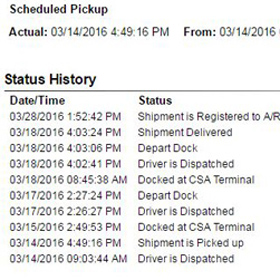
To arrange terminal pickup: When booking your shipment, request "Hold at Terminal for Customer Pickup". You can monitor your shipment's status through CSA's online tracking - look for the status "DOCKED" which indicates your freight has arrived at the terminal.
For a terminal pickup, your freight typically goes through three stages:
- Arrived – Freight is physically at the terminal, but still on an inbound trailer or in a staging lane.
- Staged for Pickup – Off the inbound trailer, labelled, and positioned where dock staff can access it for customer pickup.
- Released – Documentation verified, and dock staff load it onto your vehicle.
Call Before Arriving at the Terminal
Seeing "DOCKED" status in tracking indicates arrival, but calling ahead ensures your freight is staged and ready for pickup. This helps avoid potential wait times if the freight is still in a staging lane or positioned behind other shipments.
Before You Go to a CSA Terminal
Call First With Your CSA Tracking Number:
- Confirm shipment has arrived
- Confirm freight is available for pickup
Ask About:
- Terminal hours
- Walk-in pickups vs. specific time windows
Policies vary by location and freight type, so it's helpful to verify procedures with your specific terminal.
2. Documents You Must Have Before You Arrive
Complete documentation is essential for terminal pickups. Having all required paperwork ready helps ensure a smooth and efficient process.
Core documents for any LTL terminal pickup
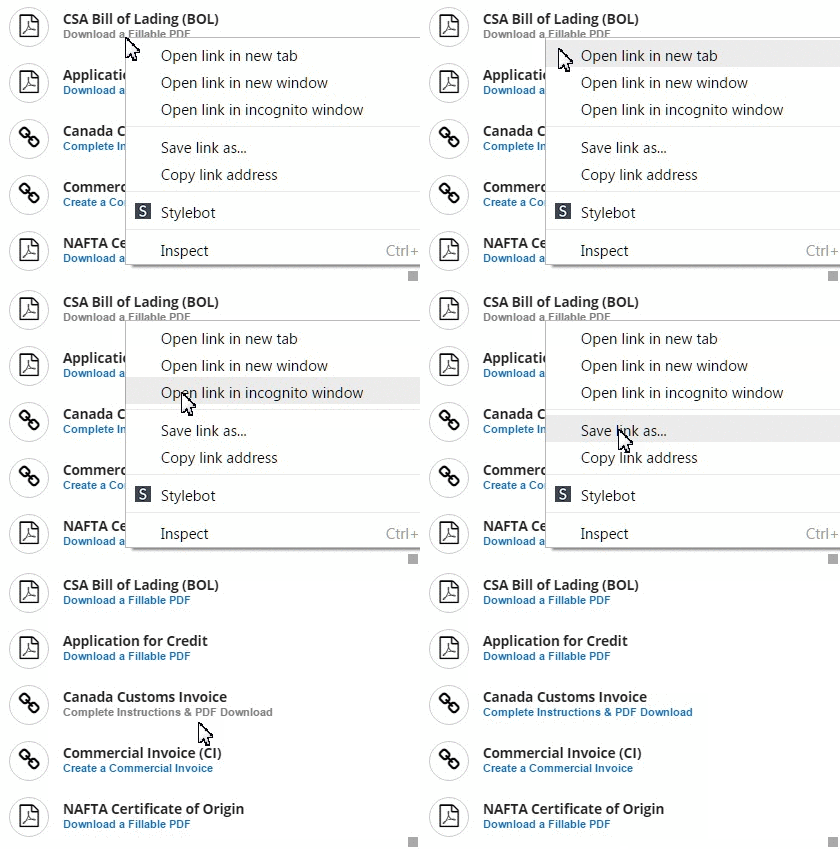
1. Bill of Lading (BOL)
The contract of carriage and reference document containing:
- Shipper / consignee information
- Piece count and weight
- Description and handling units (e.g., "3 pallets of auto parts")
- Any special instructions
Tip: Bring at least one clean printed copy and keep it with you—don't assume the terminal can rely on an emailed version alone.
2. PRO / Tracking Number
Every CSA shipment has a unique reference number.
- Have it written down or saved in your phone
- Give it to terminal when you call ahead
- It's how they locate your freight in the system
3. Government-Issued Photo ID
Required for security verification at the terminal. Acceptable forms include:
- Driver's license
- Passport
- Military ID
Important: Having all required documents ready ensures a smooth pickup process. Without proper documentation, terminals cannot release freight, which may require rescheduling your pickup.
3. Vehicle & Equipment: Who Provides What
Common Misunderstanding: Many think they'll be doing their own loading on the dock. That's not how an LTL hub operates.
What the Terminal Handles
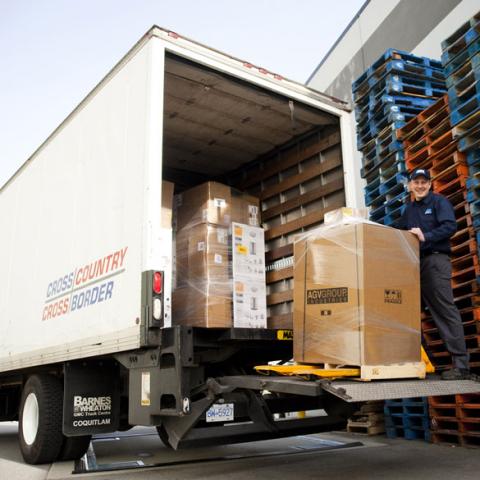
At a typical CSA terminal:
- Dock staff run the forklifts, pallet jacks, and dockplates
- They move pallets from staging onto your vehicle (or back into the warehouse if something changes)
- Customers remain in designated areas while dock staff operate equipment for liability and safety reasons
Think of the terminal as an active worksite, not self-serve storage.
What You're Responsible For
You are responsible for everything on your side of the dock door:
A Suitable Vehicle
- Enough floor space and door height for the pallet footprint
- Adequate weight capacity
- For heavy or tall freight, a box truck or dock-height vehicle is often safer
Securement Gear
- Ratchet straps or chains that match the weight and type of freight
- Edge/corner protectors to keep straps from crushing boxes
- Load bars or e-track where available
Vehicle Requirements: Terminal staff may decline to load freight into vehicles that appear unsuitable for safe transport. For example, a half-ton pickup would not be appropriate for multi-pallet machine loads due to weight and safety concerns.
4. Safety and Dock Etiquette
Terminals like CSA's are set up to keep freight and people moving safely. You're entering an industrial environment, not a retail warehouse.
Common expectations:
- Check in at the office first. Please go to the office before heading to the dock or any loading area.
- Wait to be directed to a dock door, ground-level or ramp-access door, or yard position that matches your vehicle. The terminal team will let you know exactly where to go.
- Stay in designated areas. Use only the walkways and areas identified by terminal staff.
- Wear proper footwear and avoid bringing children or bystanders onto the dock area.
Need Help? If you're not familiar with this environment, the terminal team can walk you through what to do—just ask if you're unsure.
5. When You Should Let CSA Handle Delivery Instead
CSA's network is built to pick up at your dock and deliver to your consignee, helping you avoid extra local pallet moves.
Across its terminal network, CSA offers:
- Same-day pickups when you call before the local cutoff
- Scheduled daily departures between major Canadian and U.S. cities
- Pallet-based pricing on a wide range of lane combinations
- Broad coverage across Canadian and U.S. postal and ZIP codes
- Flexible delivery options such as appointment delivery, tailgate service, call-ahead delivery, and Driver Assist
Terminal Pickup Makes Sense When:
- You're close to the terminal
- Freight is small, light, and simple (e.g., one pallet of boxed product)
- You have an appropriate vehicle and gear
Let CSA Handle It When:
- Shipment is heavy, tall, or awkward (machinery, structural components, multiple dense pallets)
- You have tight production or delivery schedules and can't afford to miss by a day
In those cases, you're usually better off booking standard pickup/delivery through CSA and letting the network do what it's designed to do. For a broader look at CSA's LTL services, see LTL freight shipping in Canada.
For detailed information about delivery options and associated charges, review CSA's Accessorial Services Guide.
6. Step-by-Step: Preparing for a Terminal Pickup
Before You Leave for the Terminal
- Call the terminal with your CSA tracking number.
- Confirm the freight has arrived
- Confirm it is available for terminal pickup
- Ask about hours, cutoff time, and where to check in
- Make sure your vehicle can handle the freight.
Confirm that your vehicle has enough space and weight capacity for the shipment so it can be loaded and transported safely. - Check your securement gear.
- A few good-quality ratchet straps for the number of pallets
- Any extra padding or protection you normally use inside your vehicle
- Any blocking/bracing you'll need inside the vehicle
At the Terminal
- Check in at the office.
Present your CSA tracking number and BOL. Follow their instructions. - Wait to be assigned to a dock or yard position.
Don't move until you're told where to go. - Inspect the freight before you sign.
- Look for crushed corners, torn wrap, broken banding
- If you see anything, note it clearly on the receipt before you sign and take photos
- CRITICAL: Never sign anything that says "received in good condition" until you've thoroughly inspected. Your signature makes you liable for any damage, even if discovered later
- Supervise loading and secure the freight.
- Let dock staff load, then you handle securement
- Make sure weight is distributed properly and nothing can shift
- Get a signed copy of the terminal paperwork.
Keep it with your shipment file. If a claim or dispute comes up, that's your proof of pickup and condition notes.
After You Leave
- Re-check securement before you hit the highway.
Straps settle; tighten as needed. - Unload with the same level of care.
Don't undo all the dock's careful handling with a rushed, sloppy unload at your facility. - Document any issues immediately.
If you discover hidden damage, photos and timestamps still matter—just don't pretend it was perfect at pickup if you saw something and signed clean.
7. Common Terminal Pickup Questions
Most terminals, including CSA's, will not release freight without proper documentation tying you to the shipment. If you forget the BOL:
- Call your office and have it emailed or faxed directly to the terminal if they accept that, or
- Come back when you have it
Terminals require physical documentation to verify and release freight.
Yes, but they need authorization:
- Provide a Letter of Authorization (LOA) on company letterhead authorizing pickup
- Make sure they have the BOL and CSA tracking number
- They must bring government-issued photo ID
Some terminals may call you to confirm verbally before release.
It is best to call the terminal ahead of time to confirm your freight is ready, if you have done this plan on:
- Around 10–30 minutes for check-in, loading, and paperwork.
If you arrive without calling first, timing can vary. During busy periods, or if your freight still needs to be staged, it may take longer while the dock team works it into their queue.
Either way, you're in a live freight environment, so the dock's schedule will drive how quickly things move.
Yes, the dock is equipped with the necessary forklifts and pallet jacks.
You are expected to:
- Bring an appropriate vehicle
- Be ready to secure the load safely before you leave
Generally no, unless you've arranged something very specific with the terminal in advance—and even then, expect extra cost and limited flexibility.
Most terminals operate standard business hours with some variation by location. Always confirm hours before planning an after-work run to the dock.
Storage Policy: CSA provides a brief grace period for terminal pickups, but storage fees apply after the initial free period:
- First 2 days: Free
- After 2 days: $7.50 per pallet per day ($25 minimum per day)
- Charges apply every day including weekends
To avoid storage charges:
- Pick up your freight promptly after it arrives
- Check CSA's online tracking regularly - when you see the status "DOCKED", your freight has arrived at the terminal
- Once you see "DOCKED" status, call the terminal to confirm your freight is staged and ready for pickup before driving there
For complete storage rates and policies, see CSA's Accessorial Services Guide.
Terminal pickup avoids certain delivery-related charges such as:
- Residential delivery fees
- Liftgate service (if your location doesn't have a dock)
- Inside delivery charges
- Limited access fees for certain locations
The actual difference depends on your specific delivery requirements. For details on delivery charges, see CSA's accessorial services guide.
Before signing anything:
- Thoroughly inspect for crushed corners, torn wrap, broken pallets, or leaking packages
- Take photos of any visible damage from multiple angles
- Note ALL damage clearly on the delivery receipt before signing
- Be specific: "Corner crushed on pallet 2" is better than "damaged"
Important: CSA recommends accepting the freight even if damaged and filing a claim. Refusing shipments may result in return shipping and storage fees, and you'll have a better chance of compensation if you accept and document the damage properly. Never sign a clean receipt if you see damage - proper documentation is critical for filing a successful claim.
For more information on CSA's claims process, see CSA's Insurance & Freight Claims guide.
8. Making the Right Choice for Your Freight
Terminal pickups can work well if you're close by, properly equipped, and know exactly what you're walking into. However, CSA's network is specifically designed to handle final mile delivery efficiently, which often makes standard delivery service the more practical choice for many businesses.
CSA Transportation handles over 700 consolidated loads monthly through 15 strategically positioned terminals across Canada and the USA. Our team manages the documentation, coordinates timing, and ensures your freight moves on schedule.
Whether you choose terminal pickup or standard delivery service depends on your specific needs:
- For terminal pickup: Use this guide to ensure you're properly prepared with the right documents, vehicle, and expectations
- For standard delivery: Let CSA's network handle the logistics while you focus on your business operations
For assistance with either option, contact your CSA representative or request an LTL shipping quote.
Author

Matt enjoys exploring creative ways to connect people through marketing, with a particular passion for sales, marketing automation, and AI. At CSA Transportation, he works on branding, content strategy, automation, SEO and campaigns that help tell CSA's story. From website updates to email designs, Matt brings ideas to life while keeping the bigger picture in mind.