
Broker vs. Direct LTL: Choosing the Right Path for Canadian Freight
Freight brokers play a vital role in the supply chain by providing flexible capacity, diverse carrier options, and support during lane changes or urgent coverage needs. Many shippers rely on brokers as trusted logistics partners.
As shipping patterns stabilize, certain lanes may become consistent and repeatable. At this point, shippers often assess whether continuing with a brokered structure is most efficient or if a direct carrier relationship would better support long-term consistency.
Comparing broker-based and direct LTL services helps shippers determine where brokerage flexibility is beneficial and where direct carrier alignment enhances performance. For regularly scheduled domestic Canada and cross-border LTL, working directly with a carrier improves communication, shipment visibility, and pricing predictability through unified LTL tracking in Canada.
Quick Navigation
- Cross-Border LTL: Why Security Means Speed
- LTL Pricing: Eliminating Fuel Surcharge Volatility
- Direct LTL Service: Network Consistency and Scalable Capacity
- LTL Tracking: Visibility and Communication Flow
- LTL Freight Claims and Carrier Accountability
- Strategic Assessment: Broker vs. Direct
- Frequently Asked Questions
- Get Your Freight Moving With Confidence
The Broker Model
- Best for volatile, irregular volume
- Sources from many different carriers
- Variable pricing and service levels
- Flexibility is the primary strength
The Direct (CSA) Model
- Best for consistent, repeat lanes
- Assets, terminals, and secure network
- Stable pricing and clear accountability
- Control is the primary strength
Cross-Border LTL: Why Security Means Speed at the Canada-USA Border
Crossing the Canada-USA border requires more than just a truck; it requires trust. When you book through a broker, you often don't know which carrier will physically move your freight until pickup. If that carrier lacks security credentials, your shipment is statistically more likely to be flagged for inspection.
CSA is a "Trusted Trader"
CSA Transportation is a Partners in Protection (PIP) accredited carrier. This designation by the Canada Border Services Agency (CBSA) means lower inspection rates, FAST lane access, and fewer border delays for your freight.

Border Inspection Risk Comparison
*Conceptual comparison based on trusted trader status
The "In-Bond" Safety Net
Scenario: Paperwork is missing at 2:00 AM.
BROKER
Truck Stuck at Border
Storage fees accumulate. Driver waits.
CSA DIRECT
Moved In-Bond
Moved to CSA's Bonded Warehouse. Truck keeps moving.
PIP Member Benefits at the Border
- FAST Lane Access — Expedited border clearance through designated Free and Secure Trade (FAST) lanes
- Lower Examination Rate — Reduced likelihood of cargo inspection by CBSA
- International Recognition — Trusted Trader status recognized through CBSA's mutual recognition arrangements with other countries
Learn more: CBSA Partners in Protection Program
LTL Pricing: Eliminating Fuel Surcharge Volatility
Standard industry pricing involves a Base Rate plus a weekly fluctuating Fuel Surcharge (FSC). This makes budgeting a nightmare. CSA Transportation offers a unique advantage: No Fuel Surcharge. The rate you see is the rate you pay, protecting your margins from global oil spikes.
Rate Volatility: Broker vs. CSA Direct
Illustrative example showing typical fuel surcharge fluctuations
The CSA Difference
0%
Fuel Surcharge
The rate you are quoted is the rate you pay. No weekly fluctuations. No surprises.
Reality Check: Accessorial charges (tailgate, appointments, redelivery) apply with any provider. CSA eliminates market volatility, not operational costs.
Budget Certainty
The rate you are quoted is the rate you pay.
Simplified Billing
No complex calculations or weekly adjustments to audit.
Margin Protection
Quote customers with confidence — oil spikes won't erode profits.
Direct LTL Service: Network Consistency and Scalable Capacity
Network Consistency and Chain of Custody
The biggest risk in LTL shipping isn't the drive; it's the handling.
Brokers often rely on spot-market carriers, increasing the risk of offloading to unaccountable third-party warehouses. CSA Direct operates a streamlined Hub-and-Spoke Network. While some handling is necessary for LTL efficiency, we optimize for long-haul moves to minimize touchpoints. Every transfer happens within our controlled system, reducing the risk of miscommunication or misrouted freight.
Chain of Custody: Visual Comparison
TYPICAL BROKER PATH
Pickup
Carrier A
3rd Party Warehouse
Unknown Handler
Delivery
Carrier B
Risk: Multiple handoffs, unknown handlers, visibility gaps between carriers
CSA DIRECT PATH
CSA Terminal
Loaded & Manifested
Sealed Trailer
Controlled Transit
Destination
CSA Delivered
Result: Minimal handling, sealed network, full visibility from origin to destination
The Broker Model
A broker often loses visibility once the freight is picked up. They may not know if your freight is being transloaded, cross-docked, or sat on a third-party floor.
The CSA Managed Network
We operate a closed network of terminals. Your freight is managed through our systems, loaded at our facilities, and travels in sealed trailers under our direct control. Even when we utilize partner capacity for the long haul, the trailer remains sealed and under our operational control dock-to-dock.
Scalable Capacity Without the Handoffs
One risk of a purely asset-heavy carrier is running out of trucks. One risk for a broker is losing control over quality.
CSA Transportation bridges this gap. We operate a high-volume linehaul network that connects Canada and the USA daily. This structure allows us to scale capacity to meet volume surges — leveraging trusted partners under our direct supervision — while maintaining the strict operational control, sealed trailers, and pricing stability of a direct carrier.
LTL Tracking: Visibility and Communication Flow
Unified Tracking
With brokered services, tracking varies because shipments move across multiple carriers with different systems.
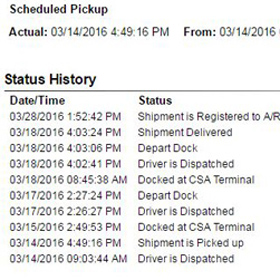
Direct LTL service with CSA keeps shipment visibility within one system. You get a single tracking number, a single source of truth, and consistent status updates. For operations that rely on accurate ETAs, this consistency significantly improves planning.
Issue Resolution Speed
With direct LTL service, you communicate directly with the carrier's dispatch or operations team. This streamlines the path to a solution for missed pickups or delivery updates. Fewer handoffs mean faster answers and clearer accountability.
LTL Freight Claims and Carrier Accountability
Direct Accountability: The Carrier of Record
In a brokered scenario, liability is often passed back and forth between the broker and the subcontracted carrier.
When you choose CSA, we are your Carrier of Record.
We hold the Bond.
We hold the PIP Certification.
We take Full Responsibility.
You have one phone number to call and one team held accountable for the result.
Claims and Documentation
Claims often require delivery receipts, photos, and supporting paperwork. With direct service, documentation is submitted straight to us, improving response time and reducing the "broken telephone" effect that often delays resolutions in brokered models.
Strategic Assessment: Broker vs. Direct
Comparing the performance profiles of a general Freight Broker versus a Direct Asset-Light Network like CSA.
Performance Comparison
Why Go Direct?
Accountability
We are the Carrier of Record. We hold the bond. One phone number, one accountable team.
Visibility
Unified tracking from pickup to delivery. No gaps between different carrier systems.
Scalability
We utilize a managed network of partners for linehaul, giving you the capacity of a broker with the control of a carrier.
Frequently Asked Questions
Consider direct service if you have consistent lane patterns, predictable volumes, and a need for pricing stability (especially regarding fuel surcharges).
If your lanes change frequently or are highly seasonal, a broker may still be the right fit for those specific shipments.
Absolutely. Many shippers use a hybrid approach: utilizing direct carrier relationships for core, high-volume lanes to ensure security and price stability, while using brokers for spot freight or new markets.
Carriers look for consistency rather than just high volume. Weekly shipments on the same lane are often more valuable than sporadic high-volume loads.
Contact CSA to see if your lane consistency qualifies for direct pricing.
No. Direct contracts are usually lane-specific. You gain predictability on your core lanes while keeping your options open for other areas of your business.
Get Your Freight Moving With Confidence
Direct LTL service doesn't have to mean sacrificing flexibility. With proper preparation and the right logistics partner, you can achieve reliable pricing, unified visibility, and clear accountability.
Why Choose CSA Transportation
At CSA Transportation, we've built our reputation on providing the control of a direct carrier with the capacity of a network. Our PIP-accredited, customs-bonded terminals and no-fuel-surcharge pricing give shippers the certainty they need to budget and plan with confidence.
Security
PIP Accredited & Bonded Facilities
Certainty
No Fuel Surcharges
Consistency
Managed Network with Sealed Trailers
Accountability
We are the Carrier of Record
Ready to Discuss Your Lanes?
Whether you are considering a shift from brokered service or looking to add direct capacity for your highest-volume lanes, our logistics specialists can help you find the right approach.
Call us today: (416) 754-0999
Author

Matt enjoys exploring creative ways to connect people through marketing, with a particular passion for sales, marketing automation, and AI. At CSA Transportation, he works on branding, content strategy, automation, SEO and campaigns that help tell CSA's story. From website updates to email designs, Matt brings ideas to life while keeping the bigger picture in mind.