Which is Best for Cost Optimization: LTL or Truckload?
Choosing between LTL (Less-than-Truckload) and truckload shipping comes down to shipment size, frequency, and how much control you need over costs. For Canadian shippers moving freight domestically or on cross-border lanes between Ontario, BC, Alberta, and key US markets like New York, Chicago, and California, understanding where each option delivers the best value helps you avoid overpaying on every lane.
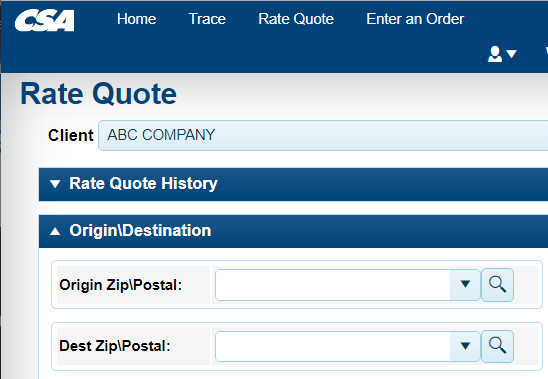
Working with a trusted LTL carrier in Canada can simplify your pricing and reduce costs — especially when pallet-based pricing replaces traditional freight class calculations. CSA's Client Portal provides instant pallet rates for 90% of Canadian and US postal/ZIP codes, so you can compare costs before you commit.
Quick Navigation
LTL (Less-than-Truckload)
- Pay only for the space your freight occupies
- Best for 1–6 pallets or under ~10,000 lbs
- Shared truck space keeps per-shipment costs low
- Multiple stops may extend transit times
- Flexible — ship as needed without volume commitments
Truckload (TL / FTL)
- Pay for the full truck — one rate, one shipment
- Best when filling most or all of the trailer
- Direct point-to-point transit — typically faster
- No handling between pickup and delivery
- Lower per-unit cost at higher volumes
Cost Comparison: LTL vs. Truckload
What Determines the Cost?
LTL and truckload pricing are calculated differently, and understanding the distinction is key to optimizing your freight spend.
LTL Pricing Factors
LTL rates are influenced by the weight, dimensions, and freight class of your shipment — since your goods share trailer space with other shippers. Additional factors include:
- Number of pallets and total weight
- Freight class or density (varies by carrier)
- Origin and destination
- Accessorial services (tailgate, appointment delivery, etc.)
- Fuel surcharges (where applicable)
Tip: Reduce your LTL costs by avoiding unnecessary accessorials. Confirm whether your receiver has a loading dock before requesting tailgate service — it's an avoidable charge on many shipments.
Truckload Pricing Factors
Truckload rates are typically quoted as a flat rate for the full truck, regardless of how much space is used. Key factors include:
- Total distance (mileage-based pricing)
- Lane demand and seasonal capacity
- Equipment type required (dry van, flatbed, reefer)
- Fuel surcharges
- Accessorial services
Tip: Truckload rates fluctuate with market capacity. If you ship consistently on the same lanes, establishing a direct carrier relationship can lock in more stable pricing than spot-market rates.
CSA Advantage: CSA Transportation does not apply fuel surcharges to LTL shipments. The rate you are quoted is the rate you pay — eliminating the weekly pricing fluctuations that make budgeting difficult with other carriers.
When LTL Costs Less
For shipments that don't fill an entire truck — typically 1 to 6 pallets — LTL is almost always the more cost-effective option. You pay only for the portion of the trailer your freight occupies, and the remaining cost is shared among other shippers on the same truck.
Action Step: For any lane where you're unsure which mode is cheaper, request quotes for the same shipment as both LTL and truckload. Compare the per-unit cost (cost per pallet or per pound) — not just the total rate — to find your breakeven point on that lane.
Key Advantages of LTL for Cost Efficiency
Pay for What You Ship
LTL pricing is based on the space your freight occupies — not the entire truck. Smaller shipments cost less.
Ship More Frequently
Without a full-truck minimum, you can ship smaller quantities more often — improving inventory flow without increasing costs.
Shared Transport Costs
Multiple shipments from different businesses are consolidated onto one truck, splitting transportation costs across all shippers.
Sustainability Benefit
LTL consolidation means fewer trucks on the road. By sharing trailer space with other shippers, each individual shipment contributes less to fuel consumption and emissions. For businesses with sustainability goals or customers who factor environmental impact into their supply chain decisions, LTL offers a measurable advantage over running partially loaded dedicated trucks.
LTL shipping also provides flexibility for businesses with variable demand. Whether you're shipping weekly from Toronto to New York or managing fluctuating volumes between Vancouver and California, you can adjust shipment sizes without committing to a full truckload — keeping your costs aligned with actual volume.
Action Step: If you're currently holding shipments to accumulate a full truck, calculate whether shipping smaller LTL loads more frequently would reduce your warehousing costs and improve delivery times. In many cases, the savings from reduced storage and faster order fulfilment offset the slightly higher per-unit shipping cost.
When Truckload Offers Better Value
Truckload shipping becomes the more cost-effective option when your freight fills most or all of a trailer. At higher volumes, the per-unit cost of a dedicated truck is often lower than the cumulative per-pallet rate of an LTL shipment — particularly on high-traffic lanes like Toronto to Chicago, Montreal to New York, or Calgary to Denver.
Truckload Makes Sense When...
- Your shipment exceeds 10–12 pallets or ~10,000 lbs
- You need direct, point-to-point transit without intermediate stops
- Reducing handling and touchpoints is a priority (fragile or high-value goods)
- You ship consistent volumes on the same lane weekly
Speed and Simplicity
Truckload shipments move directly from origin to destination without the intermediate terminal stops required for LTL consolidation. This typically results in faster transit times and fewer handling events — reducing both delivery time and the risk of damage.
For fragile or high-value goods, fewer handling events may also mean fewer damage claims. If you have a history of claims on a particular lane, factor in your claims costs when comparing LTL and truckload — the truckload premium may pay for itself in reduced damage.
Pricing Factors: Freight Class, Density & Pallet Pricing
Traditional Freight Class vs. Pallet Pricing
One of the most confusing aspects of LTL shipping is the traditional freight class system. The National Motor Freight Classification (NMFC) assigns goods to classes based on density, handling characteristics, stowability, and liability — with higher classes resulting in higher rates.
Traditional Freight Class Pricing
Rates vary based on the NMFC class assigned to your commodity. This system requires shippers to classify goods correctly — and misclassification can result in billing adjustments, reclassification fees, or unexpected cost increases.
Common with most national LTL carriers in the United States and Canada.
CSA Pallet-Based Pricing
CSA Transportation uses a simplified pallet-based pricing model for most LTL shipments. You receive a per-pallet rate that scales incrementally based on weight — with standard rates covering pallets up to 1,650 lbs and heavier pallets priced accordingly. This eliminates freight class confusion and makes costs predictable.
Available for most postal/ZIP codes across Canada and the USA through CSA's online quoting system.
How to Optimize Your Freight Density
The density of your freight — the weight relative to the space it occupies — directly affects your shipping cost. Denser freight (heavier for its size) is generally less expensive to ship because it makes better use of the truck's available capacity. Lighter, bulky shipments occupy more space relative to their weight and attract higher rates.
Here are practical strategies to improve your freight density and reduce costs:
Reduce Wasted Space
- Right-size your packaging — eliminate excess void space in boxes before palletizing. Oversized cartons lower your shipment's density and can push you into a higher rate bracket.
- Stack and consolidate — maximize the height of your pallet (up to carrier limits) rather than spreading goods across multiple partial pallets. Fewer pallets at higher density means lower total cost.
- Combine lighter items with heavier ones on the same pallet where possible, improving the overall weight-to-space ratio.
Know When to Switch Modes
- Bulky, lightweight freight can quickly become expensive on a per-pallet basis in LTL. If you're shipping multiple low-density pallets that occupy significant trailer space, compare the cost against a flat truckload rate.
- Dense, compact freight favours pallet-based LTL pricing — you get good value per pallet because you're not wasting truck space.
- Review your packaging annually — small changes in box sizing or pallet configuration can shift your density profile enough to change which shipping mode delivers the best rate.
The Hybrid Approach: Using Both LTL and Truckload
Many shippers find that neither LTL nor truckload alone covers every scenario. A hybrid approach — using each mode where it delivers the best value — often provides the lowest total freight spend.
How a Hybrid Strategy Works
Truckload for Core Lanes
Use truckload on your highest-volume, most consistent lanes where you regularly fill a trailer.
LTL for Variable Demand
Use LTL for smaller, more frequent shipments or lanes where volume fluctuates week to week.
Cross-Border Flexibility
For Canada-USA cross-border freight, LTL often provides more frequent departures than waiting to fill a full truck. CSA operates daily departures between Canadian and US terminals, so you don't sacrifice transit time by choosing LTL on cross-border lanes.
How to Segment Your Lanes:
Start by listing your top 10 shipping lanes by total spend. For each lane, note the average number of pallets per shipment and how consistently you ship that volume. This exercise alone will reveal which lanes suit truckload (high, consistent volume) and which suit LTL (lower or variable volume).
Then request quotes for both modes on your borderline lanes — typically those averaging 8–14 pallets — to find the exact crossover point where switching modes saves money. CSA's Client Portal lets you pull instant LTL pallet rates to compare against truckload pricing on the same lane.
Frequently Asked Questions
LTL shipping is typically more cost-effective when your shipment is between 1 and 6 pallets or under approximately 10,000 lbs. You pay only for the space your freight occupies, sharing the truck with other shippers. Once your shipment consistently fills more than half a truck, truckload pricing usually becomes the better value.
Traditional freight class pricing uses the NMFC system to classify goods into categories based on density, handling, stowability, and liability — resulting in complex rate calculations that can vary by commodity.
Pallet pricing simplifies this by charging a per-pallet rate that scales incrementally based on weight, with standard rates covering pallets up to 1,650 lbs and heavier pallets priced accordingly. CSA Transportation uses pallet-based pricing for most LTL shipments, making costs easier to predict and budget.
Yes. Many shippers use a hybrid approach — truckload for high-volume, consistent lanes where they can fill a full trailer, and LTL for smaller, more frequent shipments or lanes with variable demand. This allows you to optimize costs across your entire shipping program rather than committing to a single mode.
The crossover point varies by lane, distance, and commodity, but as a general guideline, truckload pricing often becomes more economical when shipments exceed 10–12 pallets or approximately 10,000 lbs.
At that volume, the per-unit cost of a dedicated truck may be lower than the cumulative per-pallet LTL rate. Requesting quotes for both options is the best way to determine the breakeven for your specific lanes.
Yes. CSA Transportation provides both LTL pallet shipping and full truckload services for domestic Canada and cross-border Canada-USA freight. Our team can help you determine which option — or combination — provides the best cost efficiency for your specific lanes and volumes.
CSA Transportation does not apply fuel surcharges to LTL shipments. The rate you are quoted is the rate you pay — eliminating the weekly pricing fluctuations common with other carriers. This makes budgeting and cost forecasting significantly simpler for regular shippers.
Get a Cost-Optimized Shipping Quote
The right shipping mode depends on your volume, lane consistency, and budget. Whether LTL, truckload, or a combination of both — CSA Transportation can help you find the most cost-effective approach for your freight.
Why Ship With CSA Transportation
CSA Transportation provides both LTL and truckload services across Canada and the USA through a 15-terminal network connecting key markets including Toronto, Montreal, Vancouver, Calgary, New York, Chicago, Los Angeles, and San Francisco. Our simplified pallet pricing, no-fuel-surcharge model, and daily cross-border departures give shippers the predictability and flexibility they need to control costs.
Pallet Pricing
Simple per-pallet rates — no freight class confusion
No Fuel Surcharges
The rate you're quoted is the rate you pay
Cross-Border Service
Daily Canada-USA departures with customs coordination
Client Portal
Instant pallet rates, order booking & tracking
Compare Your Options
Not sure if LTL or truckload is the right fit? Request quotes for both and let our logistics team help you find the most cost-effective approach for your lanes.
Or call us: (416) 754-0999
Author

Matt enjoys exploring creative ways to connect people through marketing, with a particular passion for sales, marketing automation, and AI. At CSA Transportation, he works on branding, content strategy, automation, SEO and campaigns that help tell CSA's story. From website updates to email designs, Matt brings ideas to life while keeping the bigger picture in mind.